How to Water Herbs Correctly: Avoiding Root Rot and Drought Stress
October 04, 2026

How to Water Herbs Correctly: Avoiding Root Rot and Drought Stress

Herbs are forgiving plants right up until the moment they aren't. A rosemary that has sulked all spring usually has wet feet rather than a disease. A basil that collapses on a hot afternoon is often simply dry. Watering is the job you'll do more often than any other, and it's the one most gardeners get wrong — usually in the same direction, and usually with the best intentions.

The difficulty is that herbs come from two very different kinds of place. Mediterranean herbs such as thyme, rosemary, oregano and sage evolved on thin, stony ground and cope with very little water. Soft-leaved herbs — mint, parsley, chives, coriander — come from damper ground and hate drying out. Water them all on the same schedule and one group will always be unhappy.

So the skill isn't memorising a routine. It's checking the soil before you pour, and knowing what a pot, a raised bed and open ground each do differently.

How to tell whether a herb needs water

The surface of the compost tells you almost nothing. It can look bone dry while the roots just below are sitting in moisture, so check deeper.

  • The finger test. Push a finger in to the second knuckle, roughly 5cm. Dry at that depth means water; cool and damp means wait a day and check again.
  • The weight test, for pots. Lift the pot before and after watering. Wet compost is surprisingly heavy, and once you know what a full pot feels like, a light one tells you everything in a second.
  • The skewer test. A wooden barbecue skewer pushed deep into a large pot and left for a minute comes out with a clear answer: dry and clean means water, damp and clinging means leave it.
  • The leaves. Wilting in the evening on a hot day is normal and usually rights itself overnight. Wilting first thing in the morning means the roots are genuinely short of water — or permanently sodden, which looks much the same.

That last point catches people out. Root rot and drought stress both cause collapse, but the compost tells you which one you're dealing with. Soggy soil, yellowing lower leaves and soft dark stems at ground level mean the roots are drowning. Dry compost and crisp leaf edges mean the opposite. When in doubt, water less rather than more: a herb that's a day dry recovers, a herb sitting in a swamp often doesn't.

Watering herbs in pots

Pots are where most herbs live and where most mistakes happen. In summer a small pot can dry out in a day, then swing to waterlogged the moment it rains.

Water thoroughly, then wait. Pour slowly around the rim until water runs from the drainage holes, give it a moment, and stop. Little and often is the commonest error: it wets only the top few centimetres, encourages shallow roots and leaves the compost below bone dry.

  • Empty saucers and trays about half an hour after watering. Roots standing in a puddle is the quickest route to rot.
  • Unglazed terracotta dries far faster than glazed or plastic, because water evaporates through the walls. It suits thyme and rosemary; mint will need watching in it.
  • Small pots dry out fastest of all. A 15cm pot of basil can need water twice a day in a July heatwave, while a large rosemary in a 40cm pot may go a fortnight between drinks. Judge by the pot and the plant, not by the calendar.
  • Water in the morning if you can. Compost left wet overnight, especially in cool weather, is exactly the condition root rot likes. A morning soak gives the plant all day to use the water and lets the surface dry before dusk.

Watering herbs in the ground and in raised beds

Open ground behaves differently from a pot, and mostly in your favour. Soil holds water far longer than compost, and roots can travel down to find it. An established thyme, rosemary or oregano in a well-drained border will usually need no watering at all after its first summer, even through a dry spell. The first year is the exception: water new plants regularly until they have rooted.

Soft herbs in the ground want more. Aim for a good soak once or twice a week rather than a daily sprinkle, enough to wet the top 15–20cm of soil. A rough guide is 2–3cm of water a week, including rainfall, rising in hot weather.

  • Water deeply and less often. This pushes roots downwards, where the soil stays cool and damp for longer.
  • Water the soil, not the leaves. Wet foliage invites mildew and leaf spot, particularly on mint and parsley.
  • Don't trust a light shower. Rain that barely wets the surface does nothing for the roots below. Check with a finger before assuming the garden has been watered for you.

Raised beds sit somewhere between the two. They drain fast because they're lifted above the surrounding soil, so they dry out more quickly than a border and need more attention than open ground — but they still hold moisture far better than a pot.

Group herbs by what they drink

The single easiest way to avoid trouble is to plant herbs with similar thirst together, and to keep the two groups apart in containers especially.

  • Mediterranean group: thyme, rosemary, oregano, sage, lavender, marjoram, winter savory. Full sun, gritty free-draining compost, water only when the top 5cm is dry, and sparingly in winter.
  • Soft-leaved group: mint, parsley, chives, coriander, dill, chervil, basil. Richer compost, more consistent moisture, and far less tolerant of drying out.

Planting mint beside rosemary in one container guarantees that one of them suffers all summer. If you want a mixed pot anyway, choose herbs from the same group and give the thirstier one the edge of the pot, where it drains fastest.

Mulch, drainage and a few small habits

Watering well is half technique and half setup. A little preparation in spring saves a summer of guesswork.

  • Always use a pot with drainage holes, and a layer of crocks or gravel if the holes are small. No drainage is the fastest route to root rot.
  • Mulch with gravel for Mediterranean herbs and with compost or leaf mould for the soft-leaved group. A gravel mulch keeps the collar of the plant dry, which suits rosemary and thyme perfectly; the same treatment would bake mint.
  • Add grit or perlite to the compost for Mediterranean herbs. Roughly one part grit to three parts compost transforms drainage.
  • Group pots together in summer so they shade one another and lose less water, but leave enough space for air to move between them.

A simple seasonal routine

  1. Spring: water new plantings regularly; established herbs rarely need anything yet. Ease off on anything still dormant.
  2. Summer: check pots daily, ideally in the morning. Water deeply when the finger test says dry, and expect to water twice a day in a heatwave for small pots.
  3. Autumn: reduce watering sharply as growth slows. Wet, cool soil is the classic recipe for root rot.
  4. Winter: for most herbs, water only enough to stop the compost drying out completely. Once a fortnight may be plenty, and less for Mediterranean types under cover.
When in doubt, water less. A herb that is a day dry recovers within hours; a herb left sitting in wet compost may never recover at all.

Quick troubleshooting

  • Yellow lower leaves, soft dark stem, soggy compost: too much water. Stop watering, move the pot somewhere airy, and check the drainage holes aren't blocked.
  • Crisp brown leaf edges, dry compost, plant flagging in the morning: too little. Water thoroughly and check again the next day.
  • Wilting every afternoon but fine each morning: usually normal heat stress, not a watering problem. Check the soil before reacting.
  • Mould on the surface or a sour smell: the compost is staying wet for too long. Repot into a grittier mix and cut back on watering.

Get the basics right — check before you pour, water deeply but not often, and keep the two groups of herbs apart — and watering stops being the chore you worry about. It becomes the five quiet minutes a day that keeps everything growing.

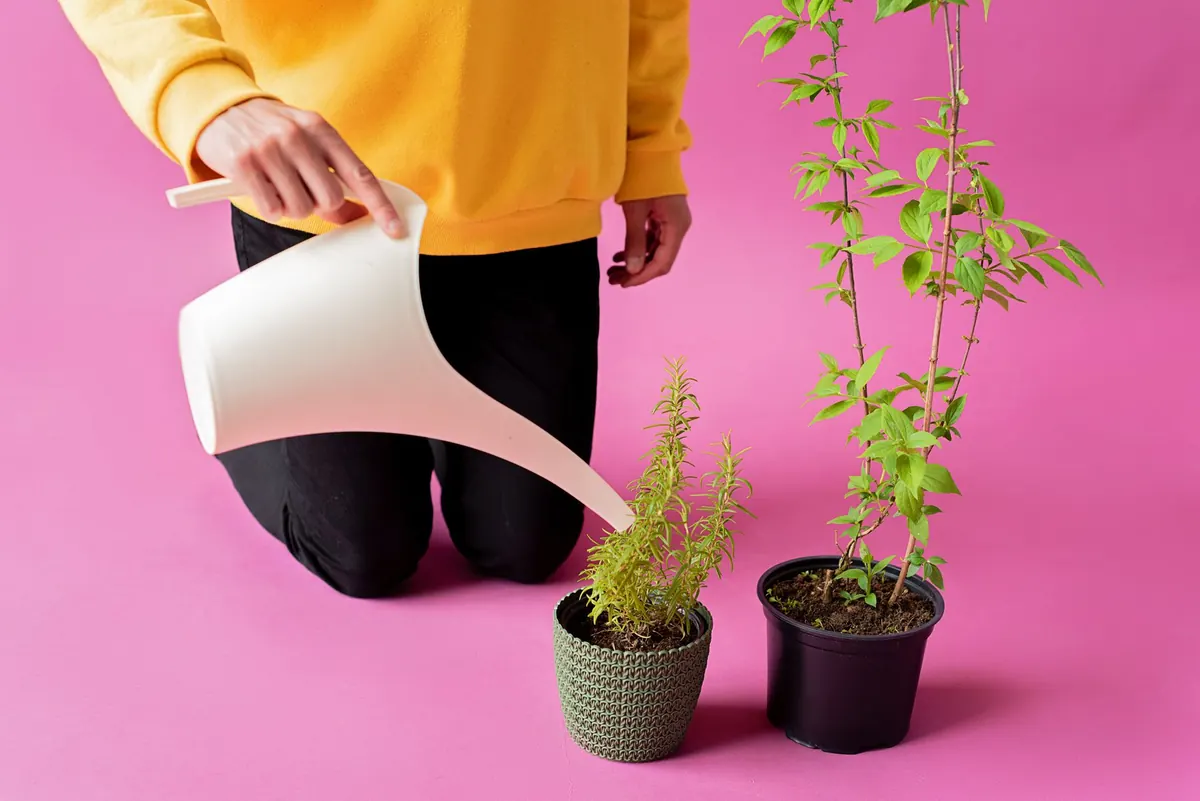
Photo: Mikhail Nilov / Pexels
Previous Post

Seasonal Outdoor Living Checklist: Preparing Your Garden for Spring

Next Post

Common Plant Care Mistakes That Kill Container Plants

Related Posts

About Us

Sage Bench

Gardening

Gardening wisdom for your outdoor space..

Read More

Latest Post

How to Lay a Gravel Path Around a Garden Bench: A Simple Guide
Low-Maintenance Landscaping Ideas for Small UK Gardens
Common Plant Care Mistakes That Kill Container Plants
How to Water Herbs Correctly: Avoiding Root Rot and Drought Stress

Gardening wisdom for your outdoor space..