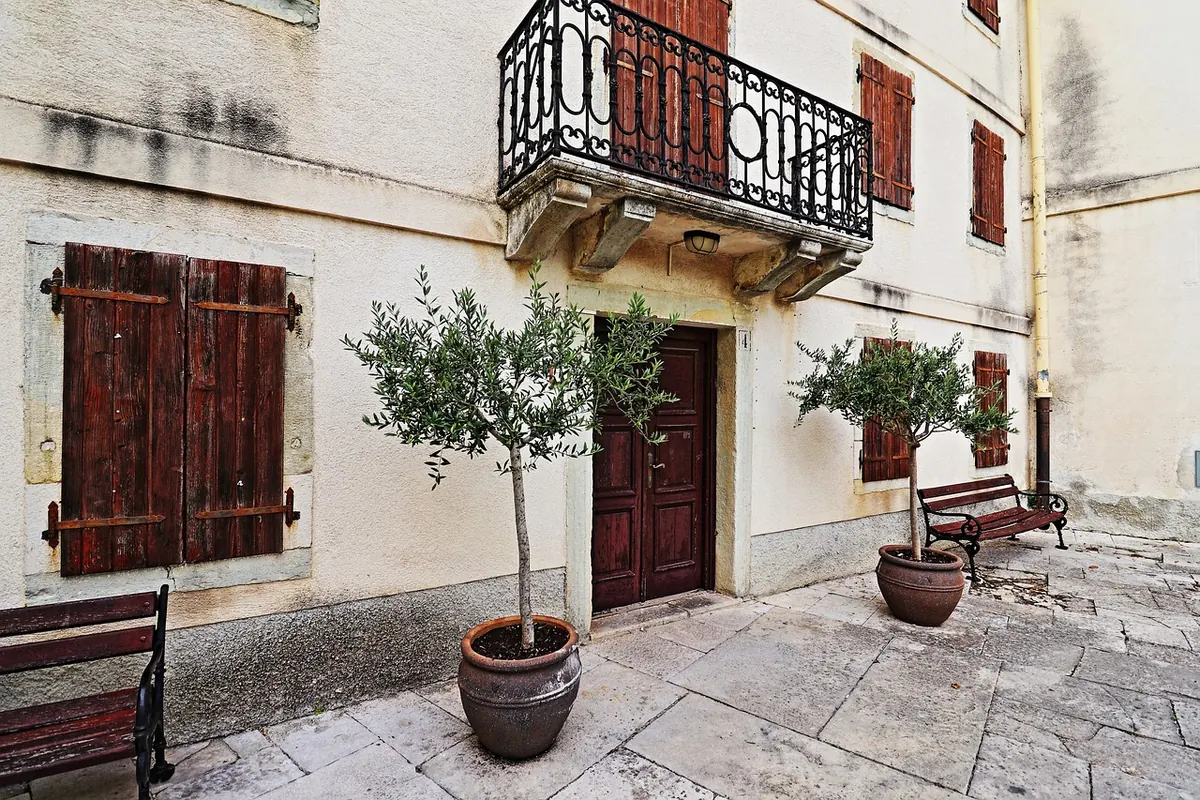
A balcony is a strange sort of outdoor space. It is technically outside, but it is small, often shaded, frequently breezy, and overlooked by at least one neighbour. None of that stops it being the most valuable square metre or two you have. With furniture that folds away, a few washable textiles and a handful of hardy herbs, a narrow city balcony becomes somewhere you can eat breakfast in April and read under a blanket in October.
Do this in daylight, with a tape measure, before you open a single product page. Write down the length and depth, then note the things that actually decide what will fit:
If you rent or hold a lease, check what you are allowed to fix to walls, railings or the structure before you drill anything. A quick written question to the freeholder or managing agent saves an argument later.
On a small balcony, depth matters more than width. Look for a bistro table around 60cm across with two chairs that tuck right underneath, or a narrow drop-leaf table that folds flat against the wall. Stacking stools are quietly brilliant: one becomes a side table, two become a footrest, and all of them stack in a corner when you need the floor back.
Check the folded dimensions as carefully as the open ones, because that is the size you live with. Powder-coated aluminium and steel shrug off rain far better than most untreated softwood, though teak and acacia look warmer and simply need an annual oiling. If your balcony is exposed, avoid anything that could become a sail in a gust, and don't leave folding chairs unsecured when a storm is forecast.
No cushion is genuinely weatherproof, whatever the label says. Water-resistant fabrics with quick-dry foam are the closest you will get, and even those last longer if you bring them inside after use. If you leave them out through a wet autumn, the filling compresses, the seams go green and you will be replacing them by spring.
Storage is the real answer. A bench with a lift-up lid, or a lidded box lined with an old towel to absorb condensation, keeps cushions dry and out of the way. Add a small outdoor rug in polypropylene, or interlocking deck tiles over tired concrete. Both make the floor warmer underfoot and instantly make the space feel more like a room than a ledge.
Herbs earn their place because they look good for months and you can eat them. Rosemary, thyme, sage, oregano and chives cope with wind and cold far better than basil, which is really a summer guest. Keep mint in its own pot, or it will colonise everything else. A bay standard or a lavender in a decent-sized pot gives structure and scent.
Use pots with drainage holes, mix in a handful of grit so compost does not sit soggy, and stand them on feet so water drains away rather than staining the balcony floor. Group pots together: they shade each other's roots and hold a little humidity. Put saucers underneath if there is a balcony below yours, both for your neighbour's sake and because many leases require it.
For privacy, tall grasses, a small bamboo or a planter with a compact climber will do more than a plastic screen, and they soften the wind as well as the view. Where you need something faster, willow or reed screening can be cable-tied to a railing. Check the height restrictions in your lease, secure anything loose at the top and bottom, and never lean a heavy screen against a glass balustrade.
Warm white light is what makes a balcony feel cosy; cool white makes it feel like a car park. Clip-on solar string lights along the railing need no wiring and no drilling. A rechargeable lantern on the table, or a battery candle in a jam jar, gives you a pool of light exactly where you sit.
Be cautious with heat. Open flames, fire pits, chimineas and most barbecues are either banned by lease or genuinely risky on a balcony, particularly one with a combustible deck or an overhanging balcony above. If you want real warmth, a thick throw in a storage bench and a hot water bottle will do the job without the risk. Small electric patio heaters exist, but check your lease and make sure any socket is suitable for outdoor use before plugging one in.
Wind, not cold, is what sends most people back inside. A retractable awning or a parasol with a weighted base helps, provided you take it down before a gust. Slim windbreak panels fixed to the railing work well on the exposed end of a balcony. Anything you add should be secured top and bottom, and light colours will keep the space feeling open rather than boxed in.
A small outdoor mirror fixed securely to a wall bounces light around a narrow balcony and makes it feel twice the size. It also gives you something to look at other than the flats opposite.
Cosy balconies are maintained, not decorated. Shake and bring in the cushions when you come inside, empty the saucers after rain, and wipe down furniture frames once a month with a damp cloth. In autumn, oil wooden furniture, move tender herbs to a sheltered spot or indoors, and store textiles somewhere dry. In spring, scrub the floor, top-dress the compost in your pots, and check every fixing and tie for damage the winter wind may have caused.
Keep a small basket by the door with secateurs, a cloth and a box of matches for candles. It turns a quick tidy into something you barely notice doing, and it means the balcony is always ready to use rather than something to be sorted out first. Cosy, in the end, comes down to three things: somewhere warm to sit, something green to look at, and a light you can switch on without going back indoors.
Photo: Van3ssa_ / Pixabay

A practical guide to digging, edging and compacting a durable gravel path and seating pad around a garden bench,...

Practical ways to cut the workload in a small British garden, from gravel and raised beds to evergreen structure,...

Yellow leaves, soggy compost and straggly growth usually trace back to a handful of container-care mistakes. Here's...

Gardening wisdom for your outdoor space..
